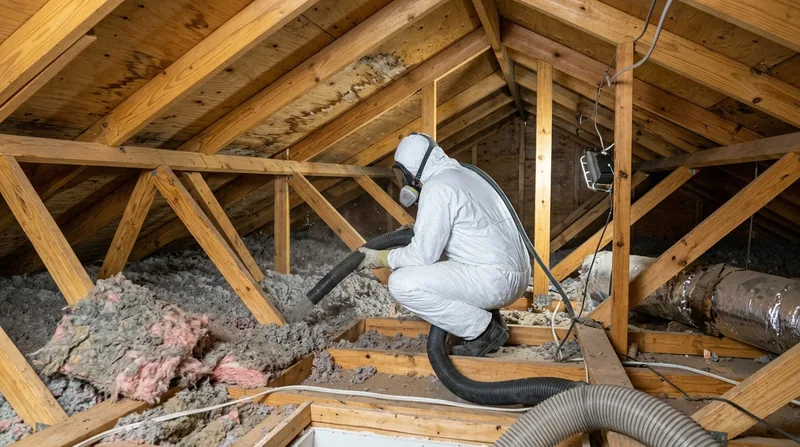




Insulation Removal in McKinney is the essential first step before any retrofit spray foam job goes in. McKinney's climate runs hot and humid, with summer temperatures that routinely exceed 100 degrees and vented attics that hit 140 degrees by mid-afternoon. Most homes built before 2000 carry blown-in fiberglass or cellulose that has settled, compacted, or absorbed moisture over decades. When that old insulation is soaked, contaminated, or simply no longer performing, it has to come out cleanly and completely before new foam can be applied. We vacuum out failed batts and blown-in material without burying it, cut out deteriorated spray foam that other crews will not touch, and flag vermiculite for professional testing before leaving it alone. The job is dirty, technical, and non-negotiable for the retrofit to work.
Why Insulation Removal Matters in McKinney's Hot, Humid Climate
McKinney sits on the Blackland Prairie north of Dallas, where black expansive clay and intense summer heat combine to demand tight, efficient attics. Older single-story brick ranches with low-slope attics and 1980s-90s two-story homes with bonus rooms over garages all carry vented attic spaces that pull in hot, humid air from outside. Once fiberglass or cellulose insulation absorbs that moisture, it loses R-value, develops odor, and can harbor conditions that favor mold growth. Blown-in material also settles over time, leaving wall tops and rim joists exposed. New spray foam cannot bond or seal properly over wet, compressed, or contaminated substrate. The insulation has to come out first.
- We vacuum out settled and compacted blown-in fiberglass and cellulose completely, leaving no residue or dust behind.
- We remove saturated batts and other material that has absorbed moisture or pipe leaks over years.
- We cut out failed spray foam installations where density, coverage, or thermal barriers do not meet code or performance standards.
- We flag vermiculite insulation for licensed testing and never disturb it ourselves, protecting you from potential asbestos exposure.
- We haul all waste off-site in sealed containers, keeping your home clean during the transition to new foam.
Proper removal protects your home, ensures new insulation bonds correctly, and sets the stage for a spray foam retrofit that actually performs.
Key info: McKinney's summer humidity and 100-plus-degree heat stress old fiberglass and cellulose insulation. Moisture-soaked material loses R-value, settles unevenly, and blocks the adhesion of new spray foam. Removal is not optional on a retrofit; it is the foundation of the job.
How We Remove Insulation in McKinney: Step by Step
Our removal process is systematic and clean. We start with a site assessment to identify what material is present, check for moisture, contamination, or vermiculite, and plan the safest, most efficient removal sequence. We use industrial-grade vacuum equipment with HEPA filtration to contain dust and debris. All material is bagged, sealed, and hauled to a licensed disposal facility. Once the attic or wall cavity is clear, we inspect the substrate, address any moisture issues, and prepare the surface for new spray foam installation. The job is messy, but the result is a clean slate for your new insulation system.
- We inspect the existing insulation and substrate for moisture, mold indicators, vermiculite, or other hazards before we begin.
- We set up containment and mechanical ventilation to minimize dust and odor during removal.
- We vacuum all blown-in material using industrial equipment, leaving no residue in cavities or on rim joists.
- We remove batts, blankets, and foam manually, bagging each load for safe transport and disposal.
- We address any moisture sources, standing water, or wet substrate before we leave the job.
- We inspect and clean the cavity, making sure the surface is ready for new foam adhesion and proper thermal barrier placement.
A home in the Tucker Hill subdivision of McKinney with a 1990s two-story brick exterior and vaulted ceilings often carries compressed fiberglass in the attic and foam in the rim joists. When that fiberglass has settled and the rim foam is cracked or incomplete, we remove the fiberglass completely, inspect the rim and band joists for moisture and thermal bridging, and prepare the entire attic cavity for closed-cell foam that will seal and insulate properly. The removal is the invisible foundation of the visible result.
| Removal Method | Description | Best For |
|---|---|---|
| Blown-In Fiberglass or Cellulose Vacuum | Industrial HEPA-filtered vacuum extraction of settled material from attic cavities and wall bays. | Vented attics with 6 to 12 inches of compressed fiberglass or cellulose over joists and rim areas. |
| Batt and Blanket Removal | Manual extraction and bagging of fiberglass, mineral wool, or kraft-faced batts from cavities and joist bays. | Older homes with original 1970s-80s batts, moisture-soaked material, or uneven coverage. |
| Failed Spray Foam Removal | Cutting out and removing spray foam that has poor density, incomplete coverage, or thermal barrier defects. | Attics and rim joists where prior foam installation failed or did not meet code thermal barrier requirements. |
| Moisture-Damaged Material Removal | Complete extraction of pipe-soaked, condensation-saturated, or mold-affected insulation and substrate drying. | Homes with roof leaks, plumbing failures, or chronic attic condensation in humid climates. |
Each removal method is chosen based on what is actually in your attic or walls and what condition it is in. We do not use a one-size-fits-all approach.
Insulation Removal Cost in McKinney: What to Expect
Insulation removal pricing in McKinney depends on the volume of material, the type of insulation, accessibility, and whether moisture remediation or hazmat handling is required. A typical attic removal in a single-story ranch or two-story home with standard fiberglass starts at $950 and moves higher if the material is heavy, wet, or contaminated. Homes with large attics, multiple levels of foam, or moisture issues will require an on-site estimate. We provide written estimates that detail the scope, labor, disposal, and any additional work needed before foam installation begins.
Factors that affect the cost include the square footage of the attic or wall cavity, the depth and density of existing insulation, access difficulty, whether the material is wet or contaminated, and whether vermiculite or other flagged materials are present. A Stonebridge Ranch two-story home with a 2,000-square-foot attic full of settled fiberglass will cost more than a 1,200-square-foot attic in a Prosper townhome. Travel to Celina, Anna, or Melissa is included in our pricing, with no separate mileage charge. We always recommend getting 2 to 3 estimates so you can compare scope, labor, and disposal costs. The cheapest estimate is often incomplete; the most expensive may include work you do not need. Our estimate is free and comes with a detailed breakdown of what is included and what factors could change the final cost.
For detailed pricing guidance and to discuss your specific attic or wall cavity, visit our full pricing overview or call us at (469) 247-0288 for a free estimate with no obligation.
Cost reality: A McKinney home with pipe damage in the attic or a failed prior spray foam installation will cost more to remove than a simple top-up job. Moisture remediation, hazmat flagging, and disposal of contaminated material are real costs that protect your home and your new insulation system. Skipping removal to save money guarantees the new foam will fail.
What to Look for When Hiring an Insulation Removal Contractor Near McKinney
Not every contractor is equipped to remove insulation properly. The difference between a professional removal and a rushed job shows up immediately: dust everywhere, material buried in cavities, vermiculite disturbed without testing, or moisture left unaddressed. When you call a contractor for an estimate, ask for proof of insurance, clarify what is included in the removal scope, and verify that they use HEPA-filtered vacuum equipment and sealed disposal containers. Check references with recent McKinney, Plano, Frisco, or Allen jobs. Ask whether they inspect the substrate after removal and address moisture before new foam goes in. A contractor who rushes removal or promises to bury old material under new foam is cutting corners that will cost you later.
- Verify that the contractor carries full insurance and can provide a certificate of insurance for your protection.
- Request a written estimate that itemizes labor, material disposal, equipment, and any substrate work required.
- Ask for references from homes in McKinney, Plano, Frisco, Allen, or nearby communities where removal was completed in the last 12 months.
- Confirm that the contractor uses sealed containers and disposes of material at a licensed facility, not in a roll-off dumpster.
- Clarify the contractor's process for handling vermiculite, moisture-damaged material, or failed foam, and whether they inspect the substrate after removal.
- Get estimates from at least two contractors so you can compare scope, equipment, disposal, and labor costs without pressure to book immediately.
A professional insulation removal contractor in McKinney will be transparent about cost, equipment, and process. They will not pressure you to skip steps or promise a price without seeing the job. Ready to get started? Contact us at (469) 247-0288 or visit our contact page for a free, no-obligation estimate and a detailed walkthrough of what your home needs.
Insulation Removal in McKinney: Pricing Guide
| Service | Price | Details |
|---|---|---|
| Standard Attic Removal (Fiberglass or Cellulose) | Starting at $950 | Includes vacuum extraction, bagging, and disposal for a typical 1,200 to 1,800 square foot attic with settled material |
| Large Attic or Multi-Level Removal | Starting at $1,400 | Applies to homes over 2,000 square feet of attic space or two-story structures with multiple insulation layers |
| Failed Spray Foam Removal | Starting at $1,100 | Cutting, extraction, and disposal of existing foam with poor coverage or thermal barrier defects before new installation |
| Moisture-Damaged Material and Substrate Work | On estimate | Removal of wet insulation, drying, and remediation work require on-site inspection to determine scope and cost |
| Travel | Included | No separate mileage or travel fee within McKinney, Plano, Frisco, Allen, Prosper, Celina, Anna, and surrounding areas |
| Free Estimate | No charge | Written estimate with detailed scope, labor breakdown, and disposal plan provided within 24 hours of your call |
Indicative pricing, the exact cost depends on square footage, finish, and site access. Free personalized estimate within 24h at (469) 247-0288.


